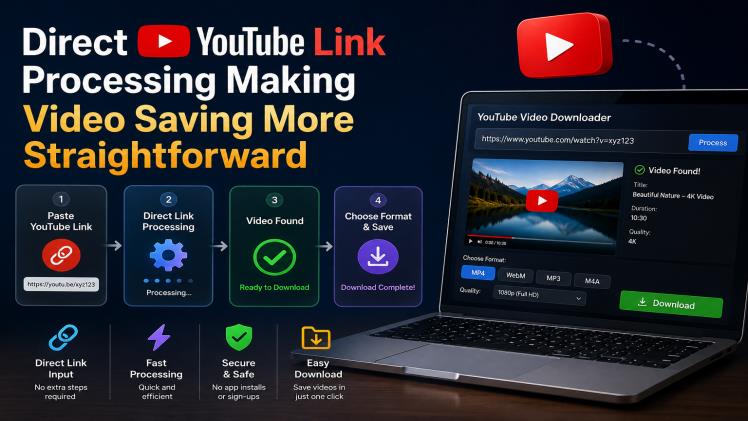
A direct YouTube link can simplify video saving when the right process is used. Instead of navigating through complicated menus, a viewer can start with one URL and choose a suitable output. For anyone looking to download youtube video, understanding link processing, format choices, quality controls, and safe handling makes the experience more predictable.
Direct Links Create A Cleaner Starting Point
A copied YouTube URL contains the destination needed for processing. A compatible downloader reads that address and identifies available media information. From there, format selection becomes possible without searching through separate pages. The approach reduces unnecessary steps and keeps the saving process focused on the original video.
Why Does Link Processing Matter?
Link processing separates identification from file saving. First, software recognizes the supplied address. Next, available streams or formats can be prepared for selection. Finally, the chosen file becomes ready for storage. This sequence matters because each stage handles a different task, reducing confusion during the saving process.
- Paste the complete video address.
- Check the detected title before saving.
- Select a suitable output format.
- Confirm quality matches the intended use.
Format Choices Shape The Final File
File format affects compatibility, size, and playback behavior. MP4 offers broad device support, while other formats can suit editing or archival needs. Resolution also changes storage requirements. A 1080p file demands more space than 480p, but higher resolution preserves finer visual detail when the source supports it.
For viewers planning to download youtube video, choosing resolution before saving prevents unnecessary storage use. A phone may need a compact file, while desktop editing benefits from higher quality. The best selection depends on purpose rather than maximum available resolution.
Can A Direct URL Save Time?
A direct address removes extra searching from the workflow. Once copied, the URL can move straight into a compatible processing field. This approach becomes useful when a specific video already has a known destination. It also reduces mistakes caused by searching similar titles or selecting an unintended result.
Still, speed should not replace verification. The displayed title, channel, and thumbnail should match the intended source. A quick check takes seconds and helps prevent saving the wrong media.
Quality Controls Deserve Careful Attention
Quality settings determine how closely the saved file matches viewing needs. Resolution controls visual sharpness, while audio selection affects listening clarity. Higher settings can create larger files, so storage capacity deserves consideration before processing begins.
A practical workflow might use:
- 720p for routine mobile viewing.
- 1080p for larger screens.
- Lower resolution for limited storage.
- Higher quality for later editing.
Direct Processing Changes The Saving Habit
Direct-link workflows shift attention from searching toward selecting. That small change can make video saving feel more deliberate. The important decision becomes choosing the right format and quality, rather than repeatedly locating the same source. A copied URL therefore acts as a simple bridge between discovery and storage.
The strongest benefit comes from control. When a viewer checks the source, selects sensible quality, and considers available space, saving becomes a planned action rather than a rushed download.
When A URL Becomes The Useful File Path
The key shift is simple: the link becomes a precise starting point, not merely a way to watch. Once source identity, resolution, format, and storage needs receive attention, the saving decision becomes more intentional. A 1080p choice, for example, carries a clear storage tradeoff rather than an automatic quality upgrade.
FAQs
Can every YouTube link be processed?
Compatibility depends on the tool, source, and current platform conditions. Private, restricted, or unavailable videos may not produce accessible options.
Which format works best for phones?
MP4 provides broad compatibility across common mobile devices. Resolution should match screen size and available storage.
Does higher resolution always improve results?
Higher resolution helps only when the source contains comparable detail. Enlarging a low-quality source cannot create missing visual information.
Is a direct link safer than searching?
A direct link reduces accidental selection of unrelated results. Source verification still matters before any file gets saved.