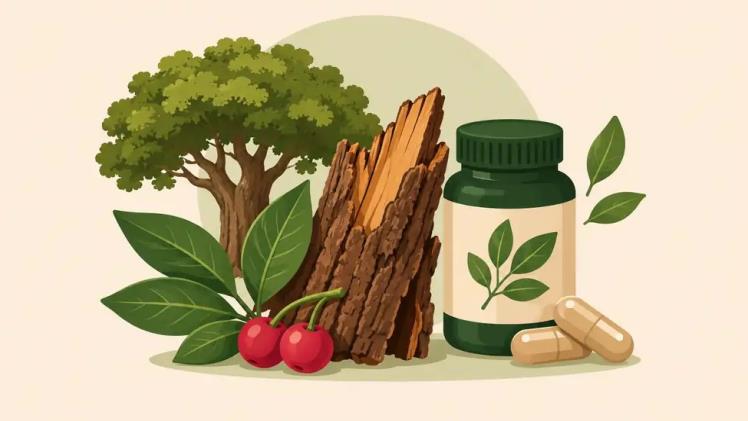
Pygeum vs African Cherry vs African Plum is a common label-confusion question. Many buyers see “pygeum” on one product, “African cherry bark” on another, “African plum” in an article, and “Prunus africana” in a botanical reference. In most supplement contexts, these names point toward the same main source: bark from Prunus africana, a tree also historically referred to by the older name Pygeum africanum.
The important detail is not the common name alone. It is the botanical identity, plant part, extract type, and sourcing information. Secrets Of The Tribe treats this as a buyer-education topic: if a product page uses several names for the same ingredient, the label should still make the exact plant and bark source clear.
This article does not provide medical advice. Pygeum supplements are not intended to diagnose, treat, cure, or prevent any disease. If you are under 18, pregnant or breastfeeding, taking medication, or managing prostate, urinary, kidney, liver, hormone-related, or chronic health concerns, ask a qualified healthcare professional before using pygeum or any concentrated botanical supplement.
Are Pygeum, African Cherry, and African Plum the Same?
In most supplement-label contexts, pygeum, African cherry, and African plum usually refer to the same tree source: Prunus africana. The supplement ingredient is typically made from the bark or bark extract.
The names are not equally precise. “Pygeum” is a supplement-market name. “African cherry” and “African plum” are common names. “Prunus africana” is the modern botanical name you should look for when reading a serious label or product page.
So the short answer is: they often point to the same source, but you should verify the botanical name and plant part before buying.
Quick Answer Box
| Name on Label or Product Page | What It Usually Means | Buyer Note |
|---|---|---|
| Pygeum | Supplement-market name for Prunus africana bark extract | Check botanical name and plant part |
| African cherry | Common name for Prunus africana | Common name alone is not enough |
| African plum | Another common name for the same tree | Verify it is not vague marketing |
| Prunus africana | Modern botanical name | Best identity marker on a label |
| Pygeum africanum | Older botanical naming style | Still appears in older sources and labels |
| Bark extract | Processed extract from tree bark | Plant part and sourcing matter |
What Does “Pygeum” Mean on a Supplement Label?
On a supplement label, “pygeum” usually means an ingredient made from Prunus africana bark. It may appear as pygeum bark, pygeum extract, pygeum bark extract, African cherry bark, Prunus africana bark, or Prunus africana extract.
The word pygeum is easy to recognize, but it is not the most precise identity term. A strong label should include the Latin botanical name and the plant part. “Pygeum 500 mg” is less useful than “Prunus africana bark extract 500 mg.”
If a product only says pygeum and gives no botanical name, no bark reference, and no extract information, the label is weak for comparison.
Why “African Cherry” and “African Plum” Can Confuse Buyers
African cherry and African plum are common names. Common names are useful for everyday speech, but they can create confusion because they do not always follow strict scientific naming rules.
A buyer might think African cherry means a fruit ingredient, or African plum means a plum powder. In pygeum supplements, the key ingredient is usually bark, not cherry fruit or plum fruit.
This is why the product page should clearly say Prunus africana bark or bark extract. Without that detail, the common name can mislead shoppers.
Why Prunus africana Is the Name to Look For
Prunus africana is the modern botanical name most useful for buyer verification. It tells you the plant identity more clearly than pygeum, African cherry, or African plum.
Botanical names help reduce confusion across countries, brands, suppliers, and older herbal references. They also help distinguish the ingredient from unrelated plants with similar common names.
A high-quality product page should not force the customer to guess. It should state Prunus africana clearly and explain whether the product uses bark, bark powder, or bark extract.
What About Pygeum africanum?
Pygeum africanum is an older naming style that still appears in older monographs, research papers, supplement references, and product descriptions. Many buyers still encounter it because the supplement industry has used “pygeum” for a long time.
In modern botanical usage, Prunus africana is the name buyers should expect to see. If a product uses Pygeum africanum, it may be using older terminology, but the label should still be clear enough to connect the ingredient to Prunus africana bark.
Older names are not automatically wrong in a historical context. They simply need clarification.
Name Comparison: Modern, Common, and Older Terms
| Term | Name Type | How to Use It When Buying |
|---|---|---|
| Prunus africana | Modern botanical name | Best label identity term |
| Pygeum africanum | Older botanical naming style | Useful in older references, but should be clarified |
| Pygeum | Supplement-market name | Common but incomplete by itself |
| African cherry | Common name | Should be backed by botanical name |
| African plum | Common name | Can sound like fruit; verify bark source |
| Red stinkwood | Common or regional name | Not enough for supplement comparison |
Why the Plant Part Matters
For pygeum supplements, the plant part is usually bark. This is not a small detail. Bark is different from fruit, leaf, seed, flower, or root.
When a product says African cherry, a beginner may imagine a fruit. But pygeum supplements are generally about bark extract. If the product does not state bark or bark extract, the label is incomplete.
The plant part also matters for sustainability. Bark harvesting can affect tree survival if done poorly, so sourcing and traceability deserve attention.
What Is Pygeum Bark Extract?
Pygeum bark extract is a processed ingredient made from the bark of Prunus africana. Extracts may be made to concentrate certain components, improve consistency, or fit capsule and tablet formats.
Some labels list extract amount. Others may list an extract ratio or standardization detail. These terms help compare products, but they do not replace botanical identity or sourcing transparency.
A product should tell you whether it contains raw bark powder, bark extract, or a standardized extract. These are not the same label claim.
Why Common Names Alone Are Not Enough
Common names can vary by region, brand, and tradition. African cherry, African plum, red stinkwood, and pygeum can all appear in the same topic area, but they do not offer the precision needed for buying decisions.
Common names also do not tell you the plant part, extract type, origin, testing, serving size, or sustainability standard.
Secrets Of The Tribe takes a cautious editorial stance here: a supplement product should not rely on a familiar common name when a precise botanical name and plant part would be clearer.
Why Sourcing Matters With Pygeum Names
Pygeum sourcing matters because Prunus africana bark has a history of international trade pressure, overharvesting concerns, and CITES-related regulation. This makes traceability more important than it might be for a simple cultivated leaf herb.
If a product says African cherry bark but gives no sourcing information, the label still leaves a major question open. Where did the bark come from? Was it legally harvested? Was it responsibly harvested? Was it traceable?
For pygeum, name clarity and sourcing clarity should work together.
What Does CITES-Aware Sourcing Mean?
CITES-aware sourcing means the brand or supplier understands that Prunus africana is connected to international trade controls. The species is listed under CITES Appendix II, meaning trade is regulated to avoid harm to wild populations.
For buyers, this does not mean you need to become a trade-law expert. It means you should prefer brands that can explain legal sourcing, origin, traceability, and responsible harvesting.
If a product page uses sustainability language but cannot identify Prunus africana or bark origin, that is a weak signal.
What to Check on a Product Page
A good product page should make identity easy. Look for Prunus africana, bark, bark extract, extract amount, serving size, source region, quality testing, and sustainability or responsible-harvesting language.
If the page uses African cherry or African plum, it should connect those common names to Prunus africana. If it uses Pygeum africanum, it should be clear that this is an older naming style associated with Prunus africana.
Good pages reduce confusion. Weak pages create more of it.
Product Page Red Flags
Be cautious if a page says only “pygeum” without a Latin name. Also be cautious if it uses several common names but never identifies the bark source.
Other red flags include no plant part, no serving size, no extract details, no sourcing information, no testing language, unrealistic claims, or vague “premium African herb” wording.
A serious pygeum product should not make buyers decode basic identity details on their own.
How to Compare Two Pygeum Products
Start with botanical name. Both products should point to Prunus africana or clearly connect older naming to that species.
Next, compare plant part. Is it bark, bark powder, or bark extract? Then compare serving size, extract details, sourcing, testing, and warnings.
Do not compare only capsule count or milligrams. A 500 mg bark powder capsule and a 100 mg concentrated bark extract may not be equivalent.
Buyer Checklist: Pygeum vs African Cherry vs African Plum
Use this checklist before buying pygeum, African cherry bark, African plum bark, Prunus africana, or Pygeum africanum products. The goal is to confirm that different names point to a clear, traceable ingredient.
Find the Botanical Name
Look for Prunus africana. If the product uses Pygeum africanum, check whether it clarifies the older naming style.
Confirm the Plant Part
Look for bark or bark extract. Pygeum supplements should not leave the plant part unclear.
Separate Common Names From Identity
African cherry and African plum are common names. They should be supported by the botanical name.
Check the Extract Type
Look for bark powder, bark extract, extract ratio, or standardized extract. Do not compare products by milligrams alone.
Look for Source Transparency
Check whether the brand shares origin, supplier standards, responsible harvesting, or CITES-aware sourcing language.
Review Quality Testing
Look for identity testing, contaminants, heavy metals, microbiology, pesticides, and batch-level quality checks.
Watch for Vague Marketing
Be careful with product pages that rely on “premium,” “traditional,” or “African herb” language without clear details.
Read Safety Warnings
Check age guidance, medication cautions, pregnancy and breastfeeding warnings, and health-condition notes.
Do Not Buy by Name Recognition Alone
Pygeum is a familiar supplement word, but the label still needs botanical identity, plant part, and sourcing clarity.
Common Mistakes to Avoid
Assuming African Cherry Means Fruit
In pygeum supplements, African cherry usually refers to the tree source, while the ingredient is commonly bark extract.
Ignoring the Latin Name
Prunus africana is the clearest identity term. Common names alone are not enough.
Thinking Pygeum africanum and Prunus africana Are Two Products
Pygeum africanum is an older naming style associated with the same source now commonly referred to as Prunus africana.
Comparing Milligrams Without Extract Context
Raw bark powder and concentrated bark extract are different. Milligrams alone do not tell the full story.
Skipping Sourcing Questions
Because pygeum is tied to bark harvesting and CITES-aware trade, sourcing transparency matters.
FAQ about Pygeum vs African Cherry vs African Plum
Are pygeum, African cherry, and African plum the same?
In most supplement contexts, they refer to Prunus africana, especially bark or bark extract from the African cherry tree.
What is the modern botanical name for pygeum?
The modern botanical name is Prunus africana.
What is Pygeum africanum?
Pygeum africanum is an older naming style still found in older references and some product descriptions.
Does African cherry mean cherry fruit?
Not in pygeum supplements. It usually refers to the African cherry tree, while the ingredient is commonly bark extract.
Does African plum mean plum fruit?
Usually no. In this context, African plum is a common name for Prunus africana, not a plum fruit supplement.
What plant part is used in pygeum supplements?
Pygeum supplements usually use bark or bark extract from Prunus africana.
Why is the botanical name important?
The botanical name helps confirm plant identity and reduces confusion from common names.
What should I check before buying pygeum?
Check botanical name, plant part, extract type, serving size, sourcing details, quality testing, and warnings.
Is common name enough for buying pygeum?
No. Common names such as pygeum, African cherry, and African plum should be supported by Prunus africana and bark details.
Glossary
Pygeum
A supplement-market name usually referring to bark or bark extract from Prunus africana.
Prunus africana
The modern botanical name for the African cherry tree commonly used as the pygeum source.
Pygeum africanum
An older botanical naming style still found in older references and some labels.
African Cherry
A common name for Prunus africana.
African Plum
Another common name used for Prunus africana.
Bark Extract
A processed ingredient made from tree bark.
Botanical Name
The Latin scientific name used to identify a plant more precisely than a common name.
Common Name
A everyday plant name that can vary by region, language, or market.
CITES
The Convention on International Trade in Endangered Species of Wild Fauna and Flora.
Traceability
The ability to follow an ingredient through its supply chain to source, supplier, batch, or region.
Conclusion
Pygeum vs African Cherry vs African Plum is mostly a naming issue: in supplement contexts, these terms usually point to Prunus africana bark or bark extract. For buying decisions, rely on the botanical name, plant part, extract details, sourcing transparency, and label warnings rather than common names alone.
Sources
Prunus africana species profile, common names, and conservation status, IUCN Red List — iucnredlist.org/species/pdf/2837924
Prunus africana taxonomy and common-name context, Plants of the World Online, Royal Botanic Gardens Kew — powo.science.kew.org
Power, policy, and Prunus africana bark trade history, Journal of Ethnopharmacology / ScienceDirect — sciencedirect.com/science/article/pii/S0378874115302440
Prunus africana monograph and bark-use context, World Agroforestry — worldagroforestry.org
Pygeum and Prunus africana overview with supplement naming context, Memorial Sloan Kettering Cancer Center — mskcc.org/cancer-care/integrative-medicine/herbs/pygeum
Trade in Prunus africana and CITES implementation overview, HerbalGram — herbalgram.org/resources/herbalgram/issues/43/table-of-contents/article1069
Prunus africana bark trade, overharvesting, and conservation overview, National Institutes of Health / PubMed Central — pmc.ncbi.nlm.nih.gov/articles/PMC4238240
Sustainable Prunus africana harvesting methods and bark-removal guidance, CIFOR / CGIAR — cgspace.cgiar.org/bitstreams/a303f896-5030-4587-a169-7e238f36373d/download
Dietary supplement consumer guidance and label-reading basics, U.S. Food and Drug Administration — fda.gov/food/information-consumers-using-dietary-supplements/questions-and-answers-dietary-supplements